
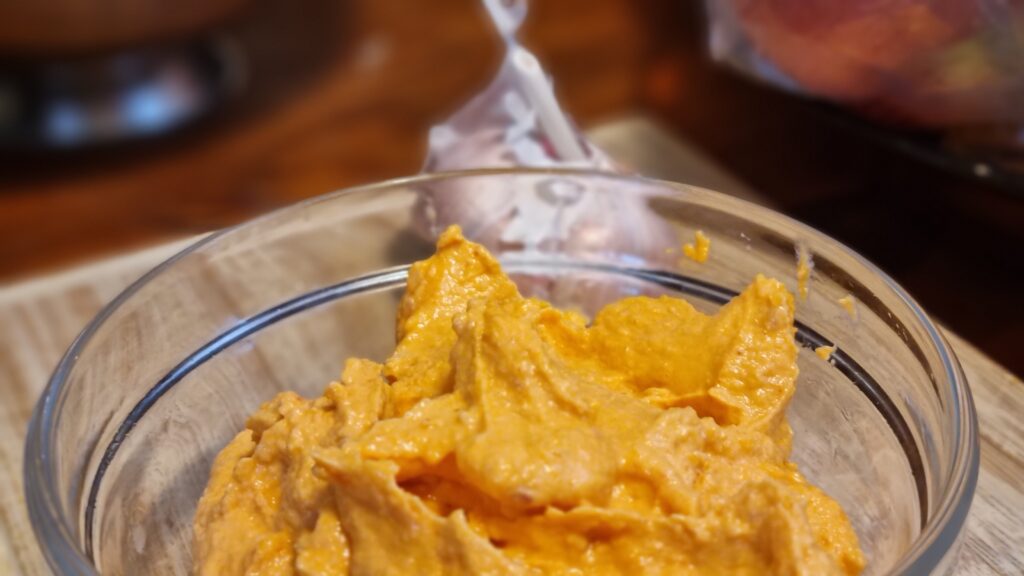
Almogrote is one of the great undiscovered treasures of Spanish cuisine. If you live in or have visited the Canary Islands, you’ll almost certainly have seen it on menus or been served it alongside some bread as an appetiser. Some restaurants (and our local butcher) also has almogrote croquettes, which are fantastic. For those not in-the-know, almogrote is a rustic, intensely flavoured cheese pâté. It’s bold, it’s complex, and once you’ve had good almogrote you understand why the people of La Gomera have been making it for centuries. It’s also incredibly easy to make yourself and a great thing to bring out next time you have friends over alongside some olives, a Canarian white wine and some warm bread.
In this recipe I’m going to give you everything you need to make an authentic almogrote (as explained to me by my Canarian neighbour!) as well as the history, my personal tips from making it at home, and hopefully an answer to every question you might have about this gorgeous spread. Let’s start at the beginning.
What is Almogrote? History & Origins
Almogrote originates specifically from La Gomera — the small, dramatically rugged island west of Tenerife that is, in many ways, the most traditionally Canarian of all the islands. It is not a recipe you find replicated anywhere else in Spain or the world; it belongs to this island almost entirely.
The story of almogrote begins with a practical problem. Farmers and shepherds on La Gomera produced excellent goat’s cheese — firm, aged, intensely flavoured. But as the cheese matured past its peak, it became too hard and dry to eat comfortably on its own. Throwing it away was of course not an option. Instead, the islanders discovered that pounding it in a mortar with garlic, dried red peppers and olive oil transformed the tough cheese into something even better than the original: a bold, spiced, spreadable paste that kept well and went with everything. Lucky us!
The name itself hints at its long history. Almogrote is often linked to almodrote, a medieval cheese-based sauce found across Spain and Sephardic cuisine. While the dish disappeared from most regions, many believe it survived in La Gomera in this simpler, more rustic form.
For most of its history, almogrote was strictly a homemade, farmhouse food that was made in every Gomeran household and rarely seen outside the island. The tourism boom from the 1970s onwards changed this, among many things in the Canaries. Visitors tasted it, wanted to take it home, and a small artisan production industry grew around it. Today — and you can read more about the island’s food culture on the official La Gomera tourism site — you can find commercially produced almogrote in every Canarian supermarket and airport, but the homemade version, made the traditional way in a mortar with good aged cheese, is still far superior to anything in a jar! In my humble opinion 🙂
La Gomera is also famous for Silbo Gomero — a whistled language that carries across the island’s deep valleys, declared by UNESCO as Intangible Cultural Heritage. Almogrote holds the same status in food terms… as one of the most distinctive things about the island’s identity.
The Key Ingredient: The Cheese
Almogrote lives and dies by the quality of its cheese. The traditional choice is queso curado de La Gomera — a hard, aged goat’s milk cheese made on the island, with a sharp, slightly salty, deeply savoury flavour and a firm, almost crumbly texture that breaks down beautifully in a mortar.
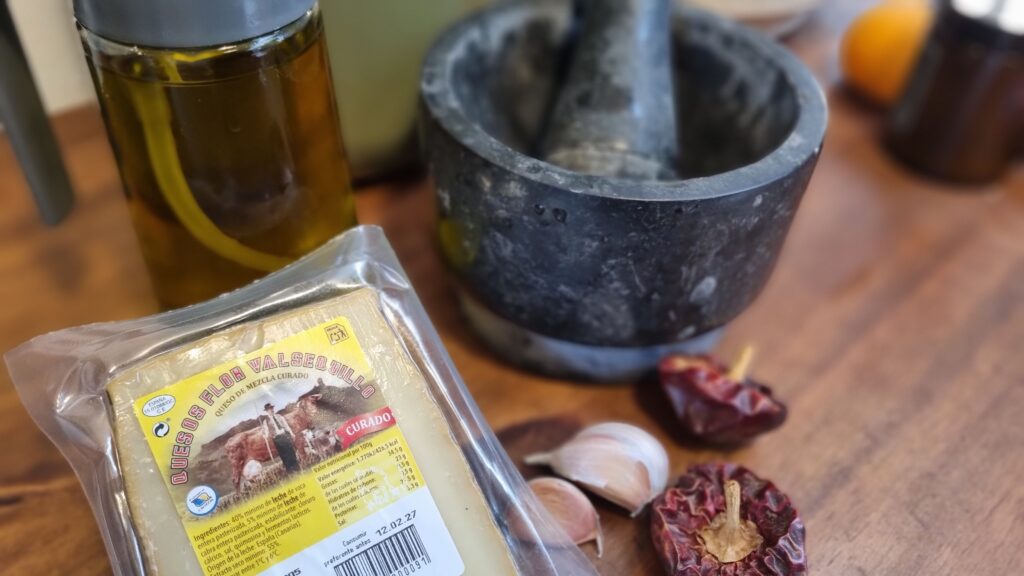
Outside the Canary Islands, finding authentic queso curado de La Gomera requires a specialist deli or online supplier. Even in my local Hiperdino I couldn’t get hold of it this time—so this time round I used a mixed curado cheese (cow and goat’s milk), which also works well. A reasonable substitute is any well-aged, hard goat’s cheese — mature manchego, pecorino romano, or a well-aged local goat cheese. The key characteristics: hard texture (not semi-soft), aged rather than fresh for the best flavour. A mild, soft cheese will produce a bland result that entirely misses the point.
Pre-grated cheese has anti-caking agents that affect both texture and flavour. Start with a whole piece and grate or crumble it yourself just before making.
Preparing the Ñora Peppers
Ñoras are small, round, dried red peppers with a sweet, smoky depth that’s quite different from regular chilli heat. They’re the traditional choice for almogrote and give it that distinctive deep-red colour and rich pepper flavour. If you’re in the Canary Islands, you can find them dried in most supermarkets — I bought mine at Hiperdino, already dehydrated, which makes the whole process very straightforward.
Here’s how to prepare them:
- Place the dried ñoras in a bowl and cover completely with warm (not boiling) water.
- Leave to soak for one hour — they’ll soften and swell back up considerably.
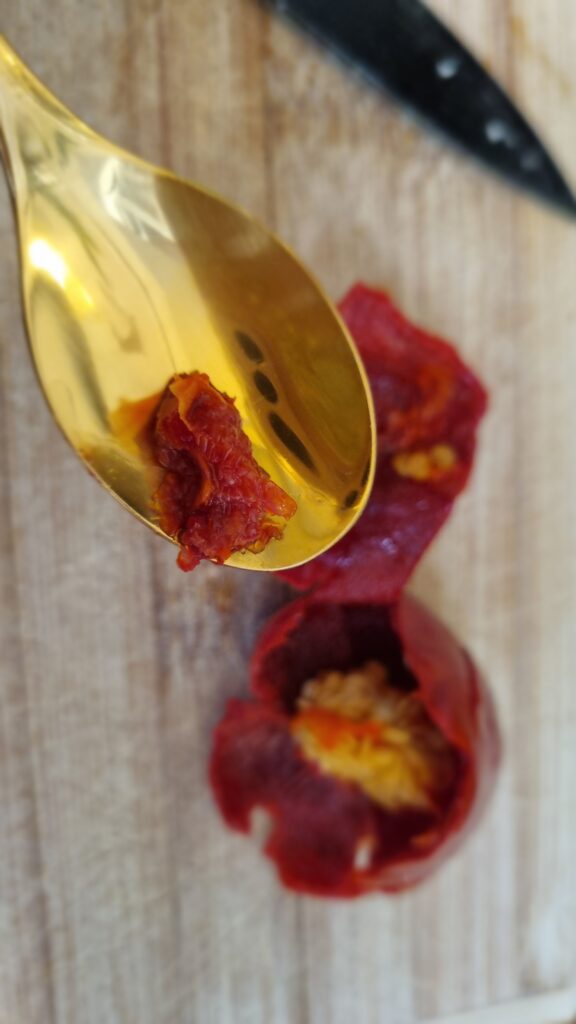
- Once soft, cut them open with scissors or a knife and scrape out and discard the seeds.
- Use a small spoon to scrape the flesh away from the inside of the skin — you want the flesh, not the skin itself. The flesh comes away easily once the pepper is properly soaked.
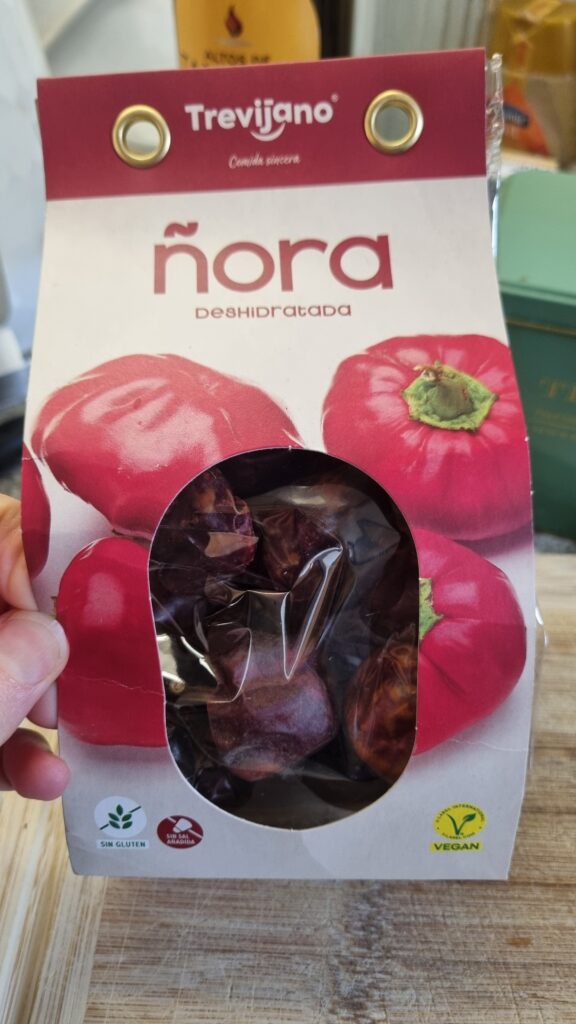
If you can’t find ñoras, you have several good alternatives:
Paprika (easiest): 1 tsp sweet paprika + ½ tsp hot or smoked paprika. No prep needed — just mix in directly. Definitely not authentic, but still makes a quick and tasty spread.
Other dried peppers: Ancho, palmeros or mulato chillies work similarly to ñoras — soak and scrape the same way.
Fresh red pepper: Roast one red pepper in the oven until charred, peel off the skin, and use the flesh. Adds a slightly different sweetness but works well.
Skip the hot sauce and fresh chilli alternatives — the flavour profile is too different from the original.
Almogrote Ingredients
You’ll need (serves 6–8 as a spread):
- 200g / 7oz aged hard goat cheese, roughly crumbled or grated
- 1–2 cloves garlic (see note below)
- 2 dried ñora peppers, soaked & flesh scraped — or 1 tsp sweet paprika + ½ tsp hot or smoked paprika
- 4–5 tablespoons extra virgin olive oil
- Salt to taste
A note on the garlic
I used 2 cloves when I made this, and I’ll be honest — it is noticeably garlicky. Almogrote is traditionally assertive and punchy, so if you enjoy bold flavours, 2 cloves is absolutely right. But if you’re not a devoted garlic lover, or if you’re making this for a mixed crowd, start with 1 clove. You can always add more; you can’t take it away once it’s in the mortar. I also found that mincing or finely chopping the garlic before adding it to the mortar makes a significant difference — it breaks down much more evenly rather than leaving coarse chunks.
How to Make Almogrote
Mortar and Pestle vs. Blender: which should you use?
The mortar and pestle is the traditional method, and I’d encourage you to try it at least once — there’s something about the process that connects you to the recipe in a way that pressing a button on a food processor simply doesn’t. The rhythmic pounding, the gradual transformation of the ingredients, the way the smell changes as everything comes together — it takes 10–15 minutes and it’s genuinely enjoyable.
That said, a blender or food processor works perfectly well. The one important warning: don’t over-process. Almogrote should retain some rough texture — it’s a rustic pâté, not a smooth cream cheese. Pulse rather than blend continuously, and stop when it looks like a thick, slightly uneven paste. Over-blending makes it dense and oddly gummy.
Prepare the ñora peppers
Soak dried ñoras in warm water for one hour until fully softened. Cut open, discard seeds, and scrape the flesh from the inside of the skin with a small spoon. Set aside. If using paprika instead, skip this step entirely.
Mince the garlic
Peel and finely mince the garlic before it goes into the mortar. Add to the mortar and pound firmly until you have a rough paste. Pre-mincing makes this much quicker and ensures even distribution.
Add the pepper
Add the ñora flesh (or paprika) to the mortar and work it into the garlic paste. Keep pounding until thoroughly combined — at this stage it should smell incredible.
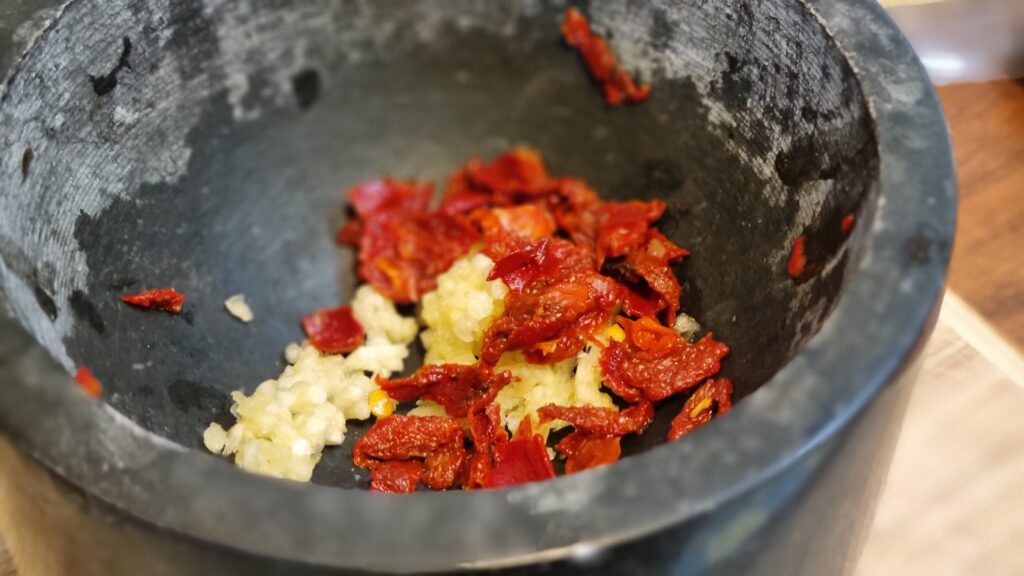
Work in the cheese
Add the crumbled or grated cheese in two or three stages, pounding and working it into the paste between each addition. It will gradually absorb into the pepper and garlic base. Blender method: add all the cheese at once and pulse 3–4 times.
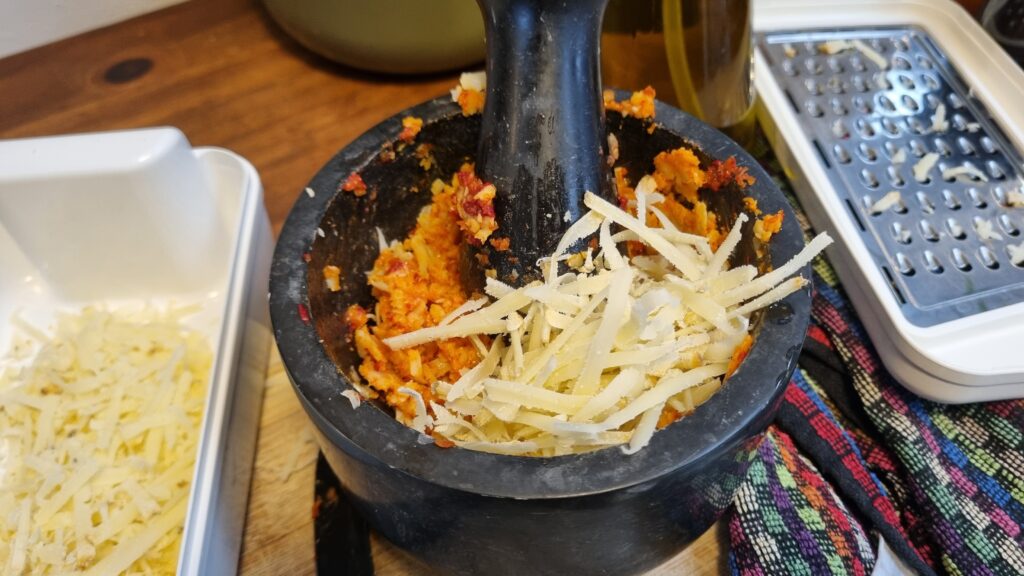
Add the olive oil
Drizzle the olive oil in slowly, continuing to pound and stir as you go. The mixture will loosen and become spreadable. Stop when you have a thick paste that holds its shape but spreads easily on bread.
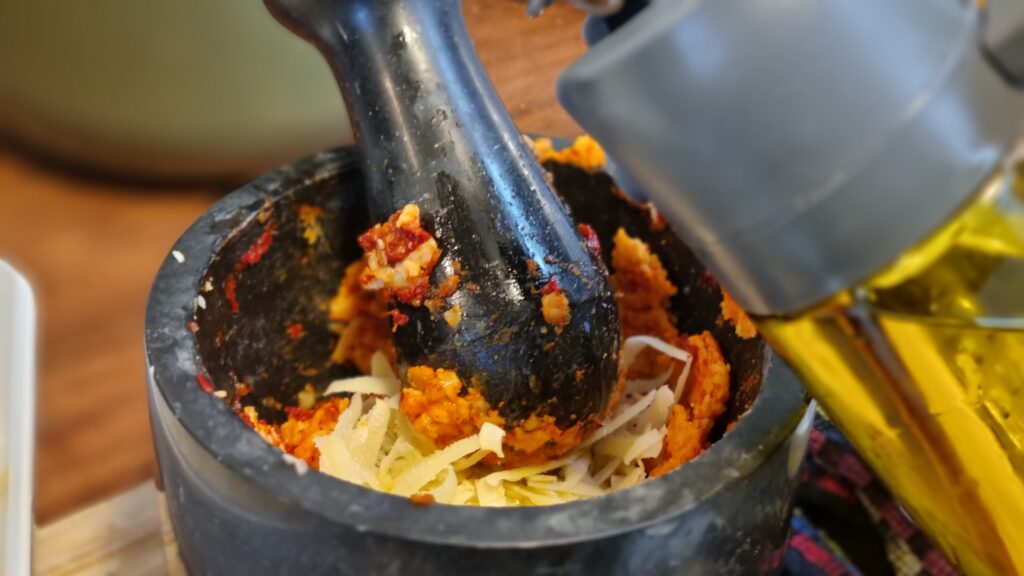
Season and rest
Taste and season with salt. Transfer to a jar or serving bowl. Cover with a thin layer of olive oil on top — this acts as a natural seal. Refrigerate for at least 30 minutes before serving. It genuinely tastes better after resting.
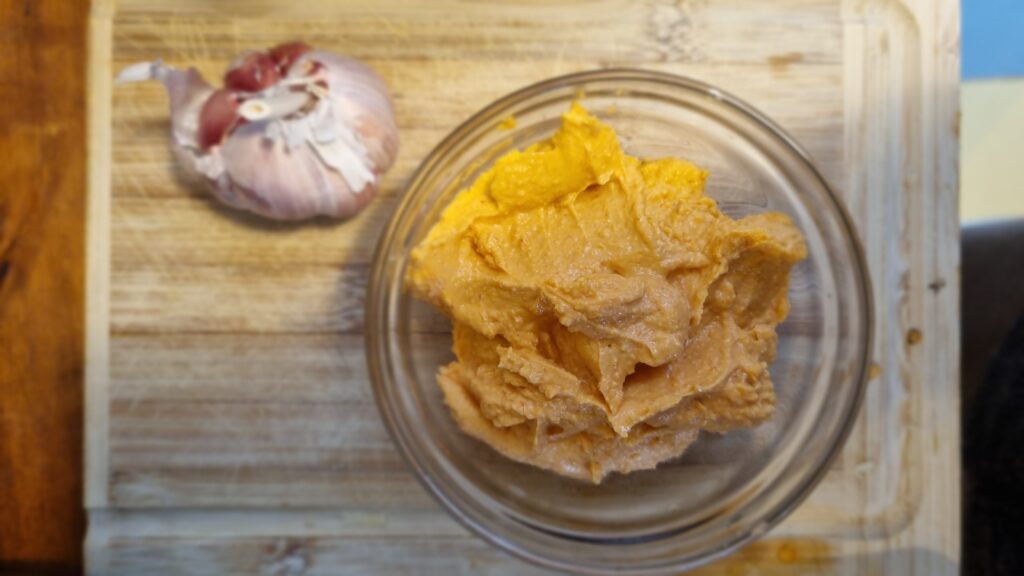
The Tomato Variation: Traditional vs. Modern
Browse enough almogrote recipes and you’ll find some that include tomato and some that don’t. It’s worth understanding the difference, because they produce noticeably different results.
The traditional recipe — the one described above — contains no tomato. Made purely from cheese, garlic, peppers and olive oil. This version has the most intense flavour, a firm, spreadable consistency, and keeps well for up to a week.
The tomato version adds one ripe tomato (sometimes roasted first with the garlic, which adds lovely depth). The effects are significant:
- Texture becomes lighter and more spreadable — easier to work with but less rustic
- Flavour is milder and slightly sweeter, with an acidic freshness that softens the punch of the cheese and garlic
- Colour shifts to a brighter, more orange-red
- Shelf life is shorter — eat within 2–3 days as fresh tomato causes it to turn acidic
For the authentic La Gomera experience: no tomato. For something more approachable for people new to Canarian food, the tomato version is a gentler introduction. My recommendation is to start with the traditional version — then experiment from there.
How to Serve Almogrote
In La Gomera, almogrote is traditionally served spread thickly on slices of toasted Canarian bread — often the dense, slightly sweet pan de millo (corn bread) or a simple white loaf. The toast provides the contrast in texture that the spread needs: crisp and light underneath, bold and intense on top.
As a starter or snack, it works beautifully on a small wooden board alongside olives, other local cheeses, and a glass of Canarian white wine.
My favourite way to eat it: almogrote on toast with a fried egg
I’ll be honest — I have no idea whether this is traditional. But it has quickly become one of my favourite breakfasts since moving to the Canary Islands. Toast a thick slice of good bread. Spread it generously with almogrote while still warm. Fry an egg in good olive oil and lay it on top. It’s a very good reason to get out of bed!
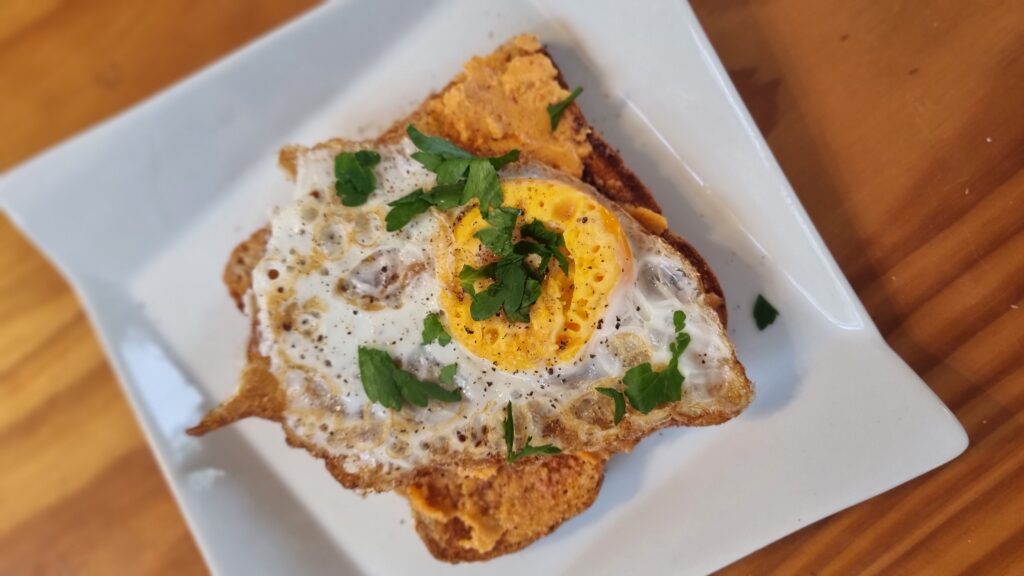
Almogrote also works stirred through hot pasta with a splash of pasta water, as a pizza base instead of tomato sauce, or melted under the grill on chicken. It’s more versatile than most people expect from a cheese spread.
Storage, Freezing & Make-Ahead
Fridge: Store in a sealed jar or airtight container. Without tomato, almogrote keeps for up to 7 days. Keep a thin layer of olive oil on top — this acts as a natural seal and keeps it from drying out. The flavour often improves after the first day.
Tomato version: Eat within 2–3 days. The fresh tomato can cause the spread to become acidic and the texture to break down if stored longer.
Freezer: Almogrote can be frozen, though the texture changes slightly on thawing — it can become a little more grainy and the olive oil may separate. Portion into small containers, freeze solid, defrost overnight in the fridge and stir well before serving.
Make-ahead: This is an excellent make-ahead dish — it actually tastes better after 24 hours in the fridge, making it ideal for preparing the day before a dinner party. Browse all our Canarian recipes for more dishes to serve alongside it.
Almogrote FAQs
Almogrote keeps well in the fridge for up to seven days (if it’s well sealed with olive oil it can last longer). Store it in a clean, sealed jar — the olive oil helps preserve it. The flavour actually deepens after a day or two as the ingredients meld together, so it’s worth making a batch in advance.
You can freeze it, but the texture changes slightly on thawing — the oil can separate and the spread becomes a little grainier. It’s still perfectly edible, but for the best texture it’s worth making fresh. If you do freeze it, store in a small sealed container, freeze for up to 3 months, and give it a good stir with a fork after thawing.
The closest widely available alternatives are an aged manchego (firm and salty, good flavour intensity), pecorino romano (very salty, use a little less), or a mature cheddar in a pinch. None are identical — Canarian goat’s cheese has a particular dryness and tang — but aged manchego gives the most authentic result outside the Canary Islands.
Ñora peppers are small, round, dried sweet-smoky Spanish peppers with a deep red colour and mild heat. They’re essential to authentic almogrote. In the Canary Islands you’ll find them in most supermarkets including Hiperdino. In mainland Spain look in the spice and dried goods aisle of any large supermarket. Outside Spain, they’re available in Spanish delis and online. If you genuinely can’t find them, a combination of mild paprika and a tiny amount of smoked paprika (1 tsp sweet : ¼ tsp smoked) is a reasonable substitute — it won’t be identical but gives something of the same colour and depth.
Yes — a food processor or blender works fine, though the texture will be slightly smoother. Add the olive oil gradually as the machine runs so it emulsifies properly. Pulse rather than blend continuously if you want a slightly chunkier result. A fork and a lot of elbow grease also works for a small batch — grate the cheese very finely first to make it easier.
Almogrote is not inherently a spicy sauce (ñora peppers aren’t spicy) – however, the garlic can make it feel spicy if you add enough! If you like spicy, I think a touch of cayenne would definitely work.
The traditional serving is on sliced bread — ideally a slightly stale or toasted baguette-style loaf — as a tapa or merienda. It’s also excellent on gofio (the Canarian toasted grain flour) biscuits if you can find them. Modern serving ideas include spreading it on sourdough toast with a fried egg, using it as a pasta sauce thinned with a little pasta water, or serving alongside crudités. It pairs very well with a cold Canarian white wine or a simple beer.
Like many traditional Canarian dishes, the origins of almogrote aren’t entirely clear. It’s often associated with almodrote, a medieval cheese sauce once common in Spain, and may also reflect the broader Arab influence on Iberian food culture — though the exact origin of the name is still debated.
Almogrote — Authentic Canarian Cheese Pâté
Ingredients
- 200 g aged Canarian goat’s cheese (queso curado) finely grated — or aged manchego as substitute
- 2 ñora peppers dried, rehydrated and flesh scraped out — see notes
- 2 cloves garlic peeled
- 1 tsp sweet paprika (pimentón dulce)
- ¼ tsp hot paprika adjust to taste
- ½ tsp freshly ground black pepper
- 4–6 tbsp good olive oil start with 4, add more to texture
- 1–2 tsp white wine vinegar
- salt to taste cheese is already salty — taste first
Instructions
- Place the dried ñora peppers in a bowl of warm water and soak for at least 1 hour until softened. Cut them open, discard the seeds and stem, and scrape the soft flesh from the inside skin with a spoon. Discard the skin.
- Put the 2 peeled garlic cloves in the mortar with a pinch of coarse salt and grind to a smooth paste. This is the flavour base everything builds on.
- Add the scraped ñora flesh to the mortar and pound into the garlic paste until well combined.
- Add the sweet paprika, hot paprika (start with less — you can add more), and black pepper. Grind everything together.
- Add the finely grated cheese a handful at a time, grinding and folding it in between each addition. The mixture will come together into a thick, slightly crumbly paste.
- Drizzle in the olive oil a tablespoon at a time, working it in between additions. You're aiming for a thick, spreadable consistency — closer to a firm hummus than a runny dip. Add vinegar to taste and check for seasoning.
- Transfer to a bowl or jar. If time allows, rest for 30 minutes at room temperature before serving, the flavour improves noticeably—even better if left overnight. Serve spread generously on toasted bread with a final drizzle of olive oil.