This guide is for people who are seriously thinking about moving to Tenerife — not visiting for two weeks. Whether you’re a remote worker, a retiree, or someone considering the Spain Digital Nomad Visa, the first question is always the same: what will it actually cost?
The honest answer is that it depends more on where you live and how you live than on Tenerife itself. A studio in Santa Cruz and a two-bedroom in Costa Adeje are both “Tenerife,” but the monthly budgets look completely different. This guide breaks it all down with real numbers, not tourism-brochure estimates.
Figures are based on data from Numbeo, Idealista, Investropa, and on-the-ground expat experience updated for 2026.
Quick Monthly Cost Summary
| Who | Budget lifestyle | Comfortable | Live well |
|---|---|---|---|
| Single person | €1,000–€1,300 | €1,600–€2,200 | €2,800–€3,800 |
| Couple | €1,500–€1,900 | €2,400–€3,200 | €4,000–€5,500 |
| Family (2 adults + 2 kids) | €2,200–€2,800 | €3,500–€4,500 | €5,500–€7,500 |
Rent in Tenerife: The Biggest Variable
Rent has risen significantly over the past few years. The combination of high tourist demand, short-term letting platforms swallowing up long-term accommodation options, and general Spanish housing pressure means you’ll pay more than you would have in 2020 or 2021. That said, Tenerife is still very affordable compared to most of Northern Europe — and the gap with mainland Spanish cities is also substantial.
Here’s a realistic breakdown by area for 2026, based on Investropa rental data (January 2026) and current Idealista listings:
Costa Adeje
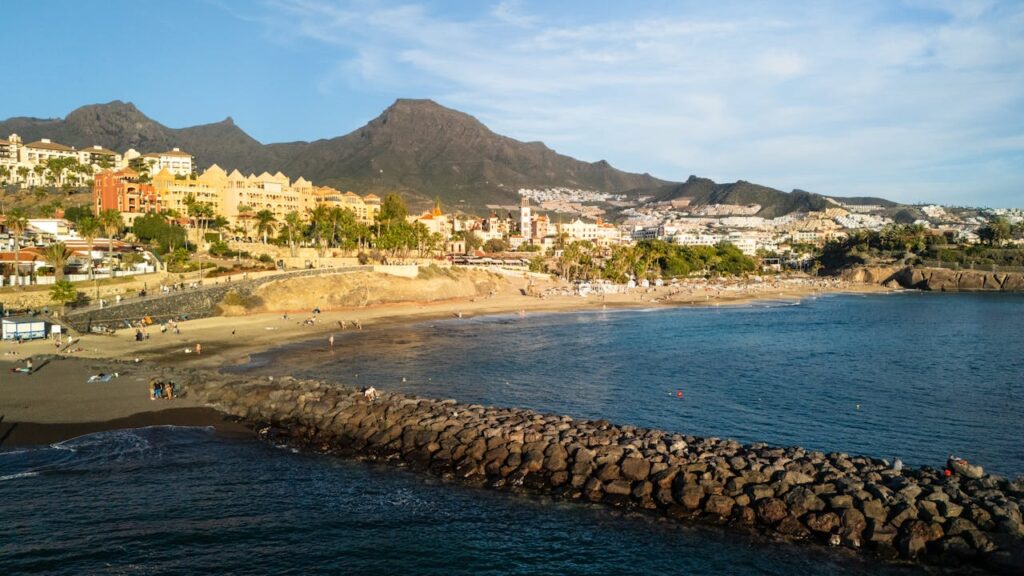
The most expensive part of the island for renters. Costa Adeje and the surrounding area (Playa de las Américas, Fañabé, La Caleta) has a large expat community, excellent infrastructure, and year-round sunshine. It’s popular for expats and tourists, and priced accordingly.
| Property type | Monthly range |
|---|---|
| Studio / bedsit | €800–€1,100 |
| 1-bedroom apartment | €1,100–€1,600 |
| 2-bedroom apartment | €1,500–€2,200 |
| 3-bedroom house/villa | €2,200–€3,500+ |
The average price per square metre for rentals in Costa Adeje sits around €19/sqm/month as of early 2026. Anything with a sea view or direct pool access adds another 10–20%.
Los Cristianos
Slightly more affordable than Costa Adeje, with a longer-established expat community and a more local feel. The port area has character; the newer developments further inland are cheaper but less walkable.
| Property type | Monthly range |
|---|---|
| Studio | €650–€950 |
| 1-bedroom apartment | €900–€1,400 |
| 2-bedroom apartment | €1,300–€1,900 |
Los Cristianos is worth considering if you want the south’s climate and convenience but don’t need to be in the thick of Costa Adeje. There’s a reasonable amount of long-term rental options here — less competition from holiday lets than in the most touristy pockets.
Santa Cruz de Tenerife
The capital, and the most affordable of the four main areas for renters. It’s a real city — noise, traffic, proper supermarkets, government offices, decent nightlife, and a port you can walk to from the centre. The overall cost of living in Santa Cruz is around 18% cheaper than Madrid. The climate is noticeably cooler and cloudier than the south, which puts some people off — but others prefer it.
| Property type | Monthly range |
|---|---|
| Studio | €500–€750 |
| 1-bedroom apartment | €700–€1,050 |
| 2-bedroom apartment | €950–€1,400 |
| 3-bedroom apartment | €1,200–€1,800 |
The provincial average rental price hit €15.85/sqm/month in January 2026 according to Investropa — still well below the south. If you’re price-sensitive, Santa Cruz is the sensible choice.
Puerto de la Cruz
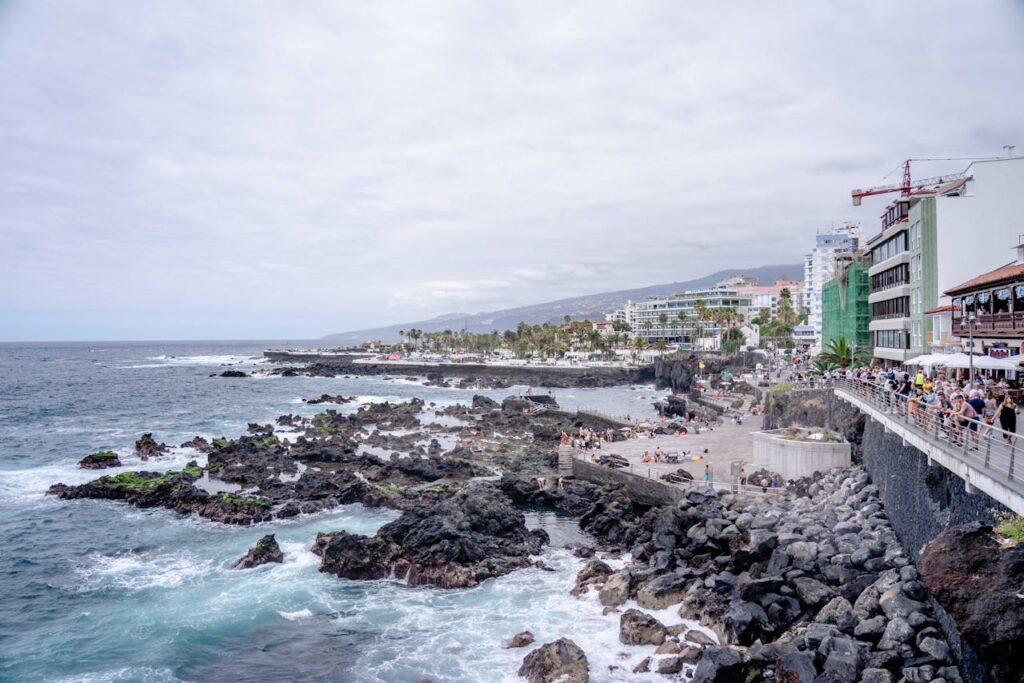
The north’s main tourist town, with an older expat demographic and a nice local culture. Wetter than the south, but beautifully lush and green. Rents are lower than Costa Adeje and competitive with Los Cristianos, with more authentic residential accommmodation options mixed in among the tourist apartments.
| Property type | Monthly range |
|---|---|
| Studio | €550–€800 |
| 1-bedroom apartment | €700–€1,050 |
| 2-bedroom apartment | €950–€1,350 |
Puerto de la Cruz is worth a serious look if you’re drawn to the north — La Orotava is nearby (one of the most beautiful towns on the island), and the coworking scene is growing. See our coworking spaces in Tenerife guide for options in the area.
Groceries
Shopping smartly in Tenerife means using Mercadona (the best all-rounder), Lidl (great for produce and basics), or local Hiperdino supermarkets. Avoid the small tourist-area shops for your weekly shop — they exist to extract money from holidaymakers and the markup shows.
| Item | Approximate price |
|---|---|
| Bread (500g loaf) | €1.00–€1.30 |
| Milk (1 litre) | €0.75–€0.95 |
| Eggs (12) | €1.80–€2.50 |
| Chicken breast (1kg) | €5.00–€7.00 |
| Mince beef (1kg) | €6.00–€8.50 |
| Pasta (500g) | €0.60–€1.00 |
| Rice (1kg) | €0.80–€1.50 |
| Tomatoes (1kg) | €1.20–€2.00 |
| Bottled water (1.5L) | €0.35–€0.55 |
| Local wine (bottle) | €3.00–€7.00 |
| Beer (6-pack, supermarket) | €3.50–€5.50 |
Realistic monthly grocery budgets:
- Single person cooking most meals at home: €200–€280
- Couple: €350–€480
- Family of four: €550–€750
Fresh fruit and vegetables are excellent and cheap — especially local produce. Fish is good quality and reasonably priced. If you drink wine regularly, you’ll be happy: Spanish wines are widely available from around €3–€5 a bottle, while local Canarian wines start at around €10.
Eating Out
Here’s where Tenerife shines for value, if you know where to eat. One street back from the tourist strip, prices drop 20–30%. Two streets back, you’re in proper local territory. And of course, if you eat at one of the local guachinches, you get top-quality local food for a fraction of the price.
| What | Cost |
|---|---|
| Espresso / café solo | €1.00–€1.30 |
| Flat white / cortado | €1.50–€2.00 |
| Beer (330ml, bar) | €1.50–€3.00 |
| Glass of local wine | €2.00–€4.00 |
| Menú del día (3 courses + drink) | €9–€13 |
| Lunch, local restaurant (per person) | €10–€18 |
| Dinner for two, mid-range restaurant | €35–€55 |
| Dinner for two, tourist area restaurant | €55–€90 |
| Takeaway pizza | €8–€14 |
The menú del día is one of Spain’s best-kept secrets. Most local restaurants do a set lunch — starter, main, dessert or coffee, and a drink — for €9–€13. It’s a full meal. If you work it into your routine (lunch out most days, cook dinner at home), you eat well without spending much.
For a single person eating out 3–4 times a week and cooking the rest: budget around €200–€350/month on food and drink combined. For a couple eating out regularly: €400–€600/month.
Transport
Public Transport
TITSA buses cover the island reasonably well, with the main routes connecting Santa Cruz, Puerto de la Cruz, and the south running frequently. A single ticket ranges from €1 to about €5 depending on distance. The Ten+ card (a rechargeable smart card, costs €2) gives you roughly 50% off standard fares and is worth getting immediately.
Monthly estimate for someone using buses regularly: €30–€70/month depending on routes used. Note that once you become a resident, you are entitled to use public transport for free. There are some caveats to this, which we will cover in a future post.
The tram (tranvía) in Santa Cruz and La Laguna is excellent — clean, punctual, cheap. If you’re based in the capital, you can absolutely live without a car.
Owning a Car
In the south, a car is near-essential unless you live in the centre of Los Cristianos or Costa Adeje. In Santa Cruz, it’s optional. In the north (outside of the main towns) or rural areas, it’s basically non-negotiable unless you’re a hermit.
Running costs per month:
- Car insurance (third party): from around €20–€35/month (annual policies from ~€250–€400)
- Comprehensive insurance: €40–€65/month
- Petrol: slightly cheaper than mainland Spain due to the island’s refinery. Budget €80–€150/month depending on mileage. As of writing (April 2026), prices are noticeably higher due to the Middle East crisis — Tenerife hasn’t escaped this rise.
- Parking: free in most residential areas, though Santa Cruz city centre has paid zones
- Annual ITV (MOT equivalent) and road tax: relatively low — budget €150–€200/year combined
Total car ownership running costs (excluding purchase): roughly €150–€280/month.
Utilities
Electricity as a whole is not expensive, but of course it depends where you live and what appliances you use. There’s no gas grid in most of Tenerife — heating (usually only needed in higher elevations), cooking, and water heating are usually all electric. Gas cooking is quite normal, though. Bills are generally quite low in summer unless you have air conditioning running all day. In winter, if you’re in a poorly insulated apartment and running electric heaters or air-con on heat mode, costs jump sharply.
| Utility | Monthly cost |
|---|---|
| Electricity (mild use, 1–2 person) | €30–€70 |
| Electricity (heavy use, winter heating) | €100–€180 |
| Water | €15–€30 |
| Broadband internet (100Mbps+) | €25–€45 |
| Mobile phone (10GB+ data) | €10–€20 |
| Community fees (if applicable) | €30–€80 |
Typical all-in utilities bill for a 1-bedroom apartment (moderate use): €50–€100/month in summer, €150–€220/month in winter. South-facing apartments with good insulation — or no need for heating because you’re in the south — stay at the lower end year-round.
Internet
Generally good. Movistar, Vodafone, and Digi are the main providers. Digi in particular offers very competitive pricing — fibre at 1Gbps from around €20–€30/month in areas where it’s available. Most long-term rentals come with internet already connected or easily arrangeable.
Coworking
If you’re working remotely, coworking is worth considering. Not just for the desk, but for the community and the separation between work and home. Tenerife has a growing coworking scene, particularly in the south and in Santa Cruz.
Typical monthly memberships run €150–€280/month for a full-time hot desk. Day passes are usually €15–€25. Some coliving/coworking hybrids in the south bundle accommodation and workspace together.
Browse spaces and compare prices in our Tenerife coworking directory.
Interactive Monthly Budget Calculator
Adjust the options below to estimate your personal monthly costs in Tenerife:
🧮 Your Tenerife Monthly Budget
Cost by Lifestyle
🎒 Budget lifestyle
- Studio or 1-bed in Santa Cruz or PdlC
- Cook most meals at home
- Menú del día 2–3x per week
- TITSA buses, no car
- No coworking (work from home)
🏡 Comfortable lifestyle
- 1-bed apartment, south or north
- Mix of cooking and eating out
- Own car for flexibility
- Coworking a few days/week
- Occasional weekend activities
✨ Live well
- 2-bed in Costa Adeje or good 1-bed with view
- Eating out 4–5x per week
- Full-time coworking membership
- Car + occasional car hire or taxis
- Gym, activities, travel around islands
Hidden Costs to Budget For
These don’t show up in the monthly numbers, but they matter — especially when you first arrive.
Rental deposits. Standard in Spain is two months’ deposit (fianza), sometimes more if the landlord asks for it. On top of that, some private landlords ask for an additional month upfront, or want post-dated cheques. Budget for 2–3 months’ rent as an upfront lump sum when you sign a lease.
Agency fees. If you go through a rental agent, you may be charged a fee — typically one month’s rent plus IVA (or IGIC here). Some landlords cover this, others don’t. It’s worth clarifying before you start viewings.
Electricity spikes in winter. Tenerife doesn’t have harsh winters, but December to February can be noticeably cool — especially in the north and at altitude. Apartments with poor insulation and no central heating rely on plug-in electric heaters or reverse-cycle air-con, which can push electricity bills up significantly. Ask about winter bills before you sign a lease.
Tourist vs local pricing. It’s real, and it’s pervasive in the south. The same beer costs 50–100% more on the Adeje seafront than it does two streets back. The same rule applies to restaurants, shops, and services. Moving even slightly off the tourist trail saves real money over time.
Car purchase. If you need a car and arrive without one, budget €4,000–€12,000 for a decent second-hand vehicle. The used car market in Tenerife is competitive but manageable. Canarian cars often have high mileage from the winding island roads.
Healthcare. If you’re not yet contributing to Spanish social security (and therefore not entitled to the public health system), private health insurance is essential. Expect to pay €50–€150/month depending on age, coverage, and provider. Once you’re registered as autónomo or employed, you join the public system — one of the better perks of being a legitimate Spanish resident.
Spanish bureaucracy costs. NIE, residency certificate, padron registration, opening a bank account — these take time and sometimes require a gestor. Budget €150–€400 for initial admin if you’re handling this with professional help. Worth every euro.
Is Tenerife Expensive Compared to…?
Mainland Spain
Compared to Madrid or Barcelona, Tenerife is noticeably cheaper. Santa Cruz is around 18% cheaper than Madrid. The tax advantages of IGIC (7% indirect tax vs 21% IVA on mainland) also feed through into slightly lower prices on goods and services. The south of Tenerife, however, is pricier than many mid-sized mainland cities — it’s a resort area, and that gets priced in.
United Kingdom
According to Numbeo’s comparison data, you’d need roughly £6,900/month in London to maintain the standard of living you’d get for around £3,500/month equivalent in Tenerife. Even compared to somewhere like Manchester or Bristol, Tenerife comes out 30–40% cheaper on most categories — and significantly cheaper on rent. The climate is rather better, too.
Germany
A comparable calculation puts Tenerife roughly 28% cheaper than Berlin. German expats make up a significant proportion of the Tenerife permanent resident community — partly for this reason, partly for the obvious climate advantage.
Who Is Tenerife Actually Affordable For?
Let’s be honest about this, because it’s changed the last few years as I’m sure most of you have seen on the news.
If you’re earning €1,500–€2,000/month net, you can live reasonably well in Santa Cruz or Puerto de la Cruz on a budget. You won’t have a car or eat out much. It’s doable, but there’s not a lot of breathing room.
If you’re earning €2,200–€3,000/month net, this is the comfortable zone for a single person. You can live in a decent apartment, eat out a couple of times a week, have a car, and take occasional trips around the islands.
If you’re earning €3,500+/month net, you can live very well — good accommodation in the south, regular restaurants, activities, saving money every month. Tenerife stops feeling like a compromise and starts feeling like a choice.
Couples and families get economies of scale on utilities and sometimes rent, but childcare and schooling add new costs. International schools in Tenerife start at around €400–€700/month per child. Spanish state schools are free but require reasonable Spanish language skills.
Who struggles: Anyone relying on UK benefits or pensions converted into euros without other income. Retirees on the UK state pension alone (currently around £816/month) would find Tenerife tough without supplementary income. The situation is manageable for UK retirees with private pensions on top.
Remote workers with Northern European or North American salaries — even modest ones — typically find Tenerife very comfortable. That’s why the island has seen such a significant influx since 2021.
Prices correct as of early 2026. Rental data sourced from Investropa and Idealista. Cost of living comparisons from Numbeo and Expatistan. Individual costs will vary depending on lifestyle, location within the island, and personal circumstances.