
The Canary Islands have been quietly building one of Europe’s best remote work scenes for years. And unlike other nomad hotspots in Europe that draw people in for their low costs of living (hello, Bulgaria), it happened because the climate is genuinely unbeatable, the cost of living is reasonable by any Western European standard, and the internet (on the main islands at least) is fast enough to run a business from. People came, liked it, told others, and stayed. And many of us (like me, the editor!) have decided to make it our permanent home.
But “the Canary Islands” covers seven very different islands, and the coworking situation varies enormously between them. Gran Canaria has the biggest ecosystem by far, while Tenerife has solid options split between two very different vibes. Lanzarote and Fuerteventura are catching up, and the smaller islands are beautiful, but you’re mostly working from your apartment or a café, hoping the WiFi holds.
This guide breaks it down island by island with actual coworking spaces, neighbourhoods, community, and assessments of what each place is like to actually work from. If you’re planning a move and need to figure out your setup from day one, or you’re already here and want to find your people, this is the starting point.
Planning to make this your base long-term and you’re not from an EU country? You’ll also want to read our guide to the Spain Digital Nomad Visa — it covers the visa that lets you live and work here legally as a non-EU citizen. And if you’re actively looking for a coworking space, browse our directory of coworking spaces across the islands.
Gran Canaria — The Nomad Capital
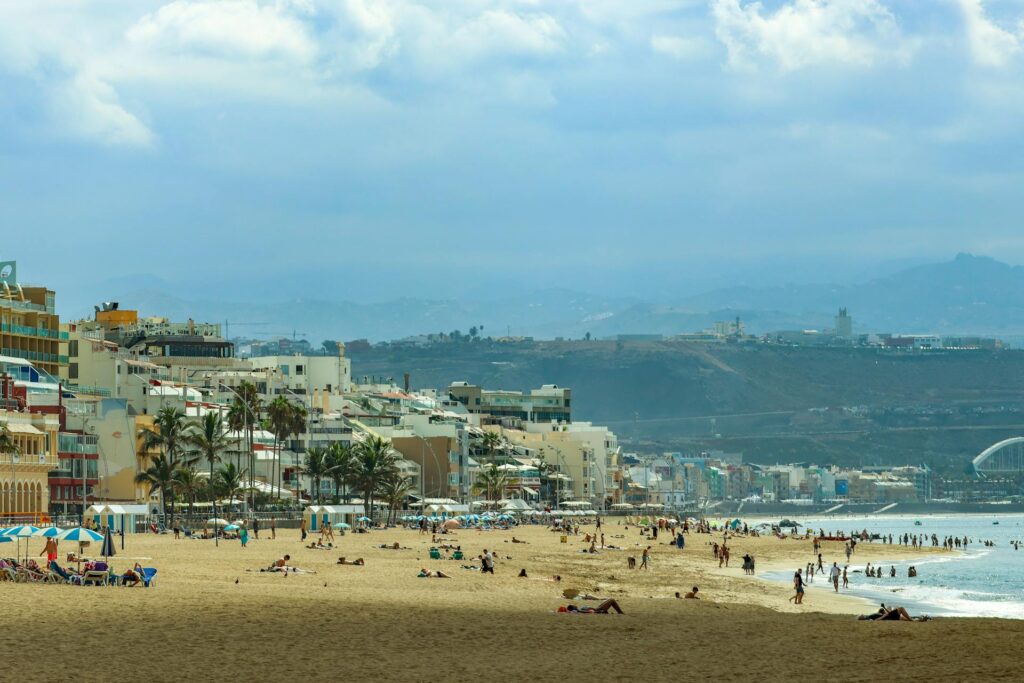
Las Palmas de Gran Canaria is genuinely the best city in the Canary Islands for remote workers for people who want maximum community and social life. Nomad List has ranked it one of the top digital nomad cities in Europe for several years running, and it earns that position. The combination of a proper city (600,000 people, real infrastructure, diverse food scene) with a 7km urban beach running through it is hard to find anywhere else.
The Best Areas to Work From
Guanarteme is the neighbourhood most nomads end up in. It sits between the old city and the sea end of Las Canteras beach, and it has the highest density of coworking spaces, good cafés, and reasonably priced apartments. It’s residential enough that you’re not paying tourist prices, but lively enough not to feel isolated.
Triana — the city’s historic commercial district is for those who want the urban buzz. Good for a day here and there; less obvious as a base if you want peace and quiet.
Vegueta, the old town, has a couple of smaller spaces and is beautiful. Cobblestones and 18th-century buildings, which is lovely until you’re lugging a monitor across the uneven pavement.
Coworking Spaces Worth Knowing
White Forest — probably the most talked-about space in Las Palmas right now. It’s in Guanarteme, about 200 steps from the beach. Standing desks, soundproof booths, meeting rooms, and a kitchen stocked with fruit and coffee. A day pass will set you back around €20 and monthly membership runs €179–200 with 24/7 access and 300+ Mbps fibre. The vibe is focused and professional — it’s not a social hub so much as somewhere you can actually get work done. Good for people who need quiet but like to have other people around.
Sky Coworking — positioned between the port and Las Canteras, and what sets it apart is the rooftop, which has a terrace perfect for morning coffee inspiration or an afternoon break. Inside, you have adjustable-height desks, extra monitors, private phone booths, and coffee (both hot and cold brew). The community is more active here than at White Forest — they run regular events, and there’s a WhatsApp group.
Talleres Palermo — a converted industrial building in Guanarteme with high ceilings and good natural light. Popular with designers and creative types. Less formal than White Forest, and slightly cheaper.
Hashtag WorkSpace — in Vegueta, which means it’s character-filled and inconvenient in equal measure. If you’re staying in the old town, it makes sense. Otherwise the commute defeats the purpose.

Community and Events
The nomad community in Las Palmas is large and self-organising. There are regular meetups — some formal and some just a group of people from Slack/Telegram deciding to get drinks. And actually, you don’t need to join a coworking space to enjoy your time in Las Palmas and meet people, as there’s so much going on outside of the spaces. So if you prefer working from a café (or bed!), you won’t be missing out on a social life.
Gran Canaria also has a larger-than-average number of remote workers who’ve made it a permanent base rather than a stopover, which means the social scene has depth. You’ll find people who’ve been here 3 years, not just passing through for 3 weeks.
Internet and Practicalities
Fibre is widely available across Las Palmas. 300–600 Mbps connections are standard in most coworking spaces. Mobile data (Movistar, Orange, Vodafone) is solid across the city. The further you get from Las Palmas and the main towns, the patchier things get.
Most cafés in Guanarteme and Triana are laptop-friendly, though the Spanish café culture means you’re expected to order something every hour or two — which is entirely reasonable. Look for spots with plugs visible before you commit to a two-hour session. Be aware, however, that several cafés and restaurants don’t allow you to work from a laptop – so before risking embarrassment of being asked to leave, check with staff before setting up.
Tenerife — Two Islands in One
Tenerife is Spain’s most visited island and also one of its most confusing for remote workers, because it has two very distinct personalities depending on where you land. The north and south are genuinely different places and there’s pretty much something for everyone.
North Tenerife: La Laguna, Santa Cruz, Puerto de la Cruz
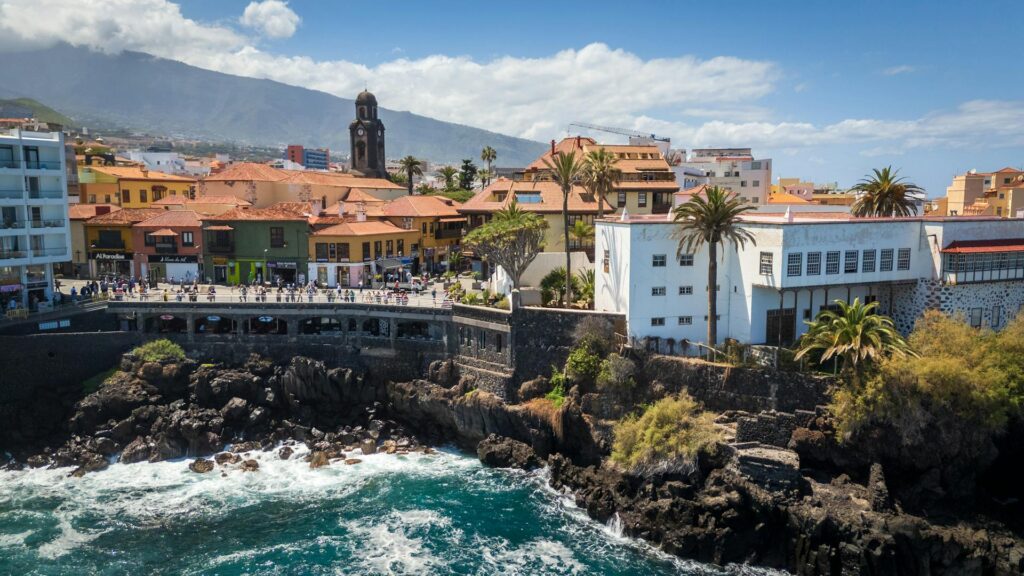
The north is where most long-term residents end up. La Laguna is a UNESCO World Heritage city with a university, colourful colonial streets, and a distinctly younger, more local feel. It’s connected to Santa Cruz by the tram, which means you can live in one and work in the other without owning a car. Rents are lower than Santa Cruz proper.
Santa Cruz de Tenerife (the capital) has many coworking options, however they generally cater more to locals/Spanish speakers, and the international scene isn’t quite as developed as in Puerto de la Cruz or in the south of the island. A few popular coworking spaces in the capital include:
- Kernel Coworking — consistently recommended by people who live here. Quiet, well-run and offers a proper working environment.
- Coworking Nomad — simple but practical space in the city centre with affordable memberships and friendly feel.
Puerto de la Cruz in the north is more relaxed — a proper town rather than a resort, with a functioning local life. Coworking in the Sun runs a space here that doubles as a social community for nomads and Spanish learners. It has a reputation for being more of a social hub than a heads-down work environment, which is either ideal or terrible depending on what you need.
Nine Coliving (La Orotava) is also a great choice for those that are looking for a community-oriented environment. It’s in the beautiful historic centre, and is great for those who want to plug into a ready-made social group.
Worth mentioning: Tandem Coworking in La Orotava (a 15-minute drive from Puerto de la Cruz) operates out of a restored Canarian mansion. It offers a slower pace, within a beautiful, traditional Canarian building. Good for the occasional change of scenery or those who want to avoid the hustle and bustle of Puerto.
South Tenerife: Los Cristianos, Playa de las Américas, Costa Adeje
The south is where the sun is most reliable and where most short-stay nomads end up. The tourist infrastructure means good English, easy logistics, and a transient but active nomad crowd. But it’s also the part of the island that looks least like Spain. Think 4 Euro full-English breakfasts and late-night karaoke bars.
Zen Den is the main dedicated coworking space in the south. It’s near the beach and costs €18/day, €65/week, or €215/month. It has a reputation for being well-run, with good WiFi, and a community of people who are actually working (not just pretending to while scrolling). Worth a look if you’re based in the south.
Several coliving spaces also have coworking built in:
- Cactus Coliving — offers a mix of silent coworking, casual coworking, and outdoor garden working.
- Ocean Nomads Coliving (Los Cristianos) — beachfront, social, good views. More of a hostel than a coliving, so it’s a great place for people who don’t want to commit to a longer term membership but still want a good social circle.
Community and Cafés
Tenerife has one of the larger English-speaking nomad communities in the islands — WhatsApp groups with thousands of members, regular meetups, and active Facebook groups. The south tends to attract shorter-stay visitors; the north has more people who’ve settled in. If you want depth of community, the north wins.
For laptop-friendly cafés, La Laguna has several good options near the university. In the south, Pistachio Coffee Brunch in Los Cristianos is frequently mentioned as a digital-nomad-friendly space with good food, reasonable WiFi and no side-eye if you open a laptop.
Lanzarote — Smaller Scene
Lanzarote is a different proposition altogether. The landscape is volcanic, sparse and unlike anywhere else in Europe. The nature is the main draw for many people, and the nomad scene here is smaller and more tight-knit as a result. You’re not going to find 20 coworking spaces competing for your business. But what exists is solid and growing.
Arrecife and Puerto del Carmen
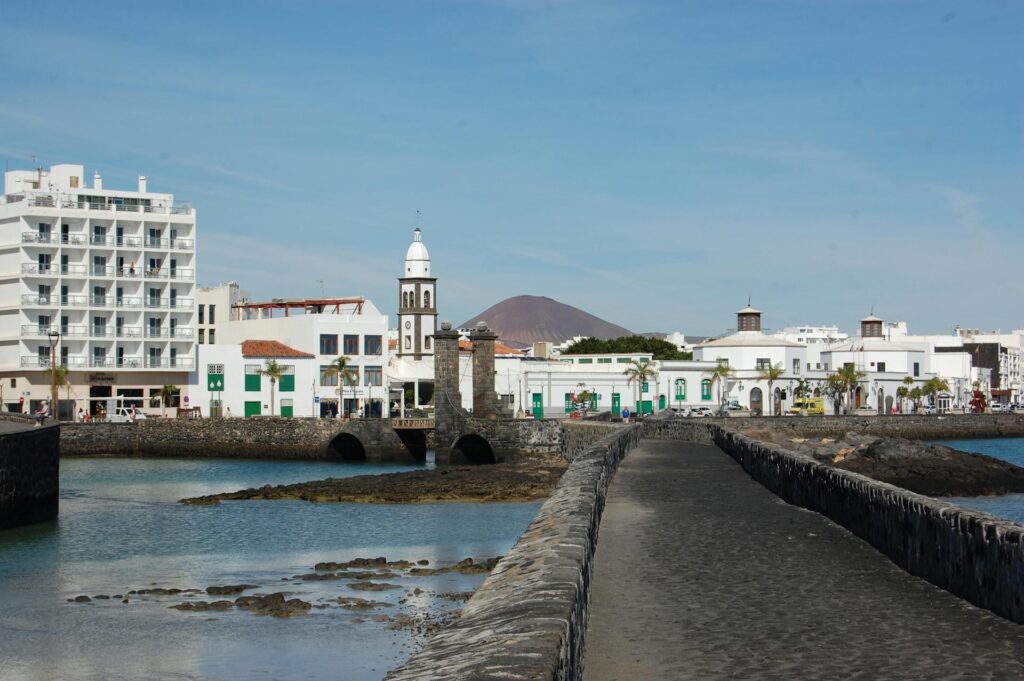
Arrecife, the capital, is where most of the coworking infrastructure sits:
- Pitaya Coliving & Coworking — the first coliving on the island, located in the El Charco de San Ginés neighbourhood. It has an active community of remote workers and runs events. If you want to meet other nomads quickly, this is the place
- Espacio The Square — central Arrecife, solid option for a hot desk
In Puerto del Carmen (the main resort town on the east coast), Area O overlooks the harbour. It’s a nicely positioned space — you can take a break and look at boats, which is either motivating or distracting depending on your personality.
Teguise, in the north of the island, has Co-Working Guru Lanzarote — spacious, fast internet, meeting rooms. Worth knowing if you’re renting in the inland villages.
What to Expect
Monthly desk rates typically run €80–120, which is cheaper than comparable setups in Las Palmas. The community is smaller, which some people prefer. Fewer networking events, but the ones that happen feel more personal. Internet on the island has improved significantly, and most coworking spaces have reliable fibre connections now.
Lanzarote works best for people who want a quieter, more immersive island experience and don’t need the social infrastructure of a bigger city. If you need a large nomad community around you, Las Palmas is the better call.
Fuerteventura — Surf, Sand, and WiFi
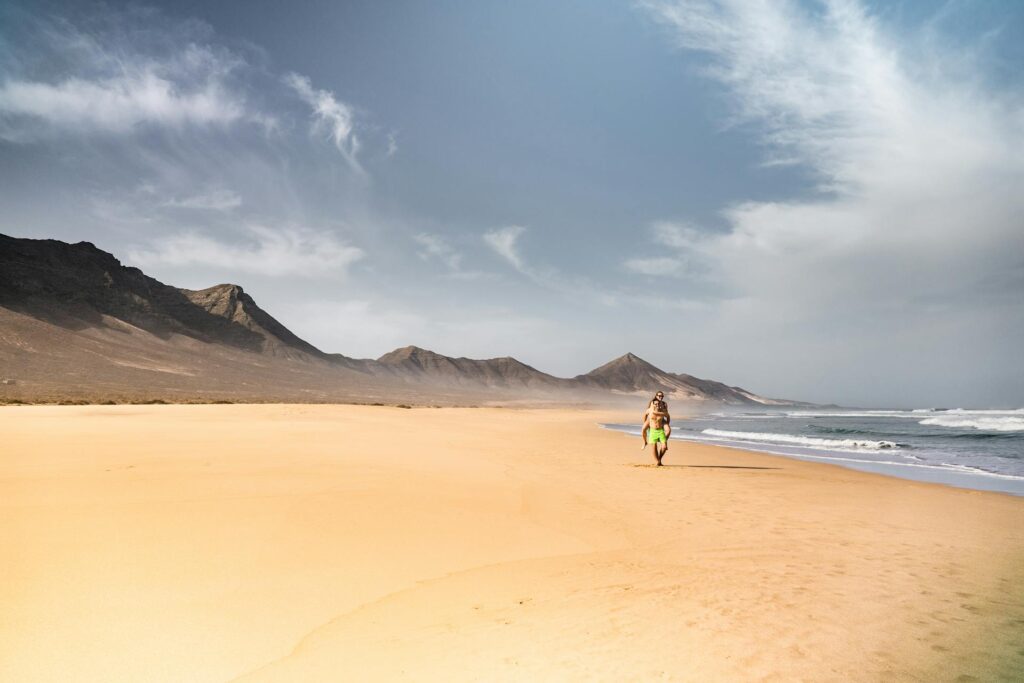
Fuerteventura’s remote work scene is centred almost entirely on Corralejo in the north, with a secondary cluster further south around Morro Jable. The draw here is the surf. A significant chunk of the nomads who base themselves in Fuerteventura are there partly because the Atlantic breaks are excellent, and they want to be in the water between calls.
Corralejo
The main coworking options in Corralejo:
- Hub Fuerteventura — hackspace and coworking combined, 300+ Mbps, relaxed atmosphere. Good for technical workers, developers, and people who want a maker-space vibe rather than a corporate feel
- Cofete Coworking — well-regarded, consistent, in the town centre. Day pass around €15, monthly around €225
- Buendía Corralejo — runs a dedicated digital nomad package including accommodation and coworking. Good entry point for a first trip to the island
A word of warning: some spaces in Corralejo have had inconsistent management and patchy reviews. It’s worth checking recent Google reviews before committing to a monthly membership. The island’s small size means some spaces struggle to sustain consistent membership numbers out of high season.
Lajares and the North
Lajares is a small village inland from El Cotillo, and it’s become a hub for the surf/nomad crossover crowd. Surfescape is based here — coworking and coliving combined, with a focus on surfing, healthy food, and a slower pace. Not for everyone, but for the right person, it’s exactly right.
El Cotillo itself has a coworking space (Coworking Fuerteventura) just 300m from the beach — €15/day, €70/week, €220/month with 24/7 access. The town is tiny, which means it’s quiet and you can work without distractions, but you’ll need a scooter or car to get around.
South Fuerteventura
Morro Jable at the southern tip has Co:working Fuerte, which offers some of the fastest internet speeds on the island (500–700 Mbps). It’s also close to the stunning Jandía beach. The town is significantly quieter than Corralejo, so if isolation and focus is what you’re after, this works well.
La Palma, La Gomera and El Hierro
The western islands are beautiful and genuinely remote. La Palma in particular — with its dense forests, stargazing-quality dark skies, and dramatic cliffs — is unlike anywhere in the archipelago. El Hierro is tiny, green, and peaceful in a way that feels almost anachronistic.
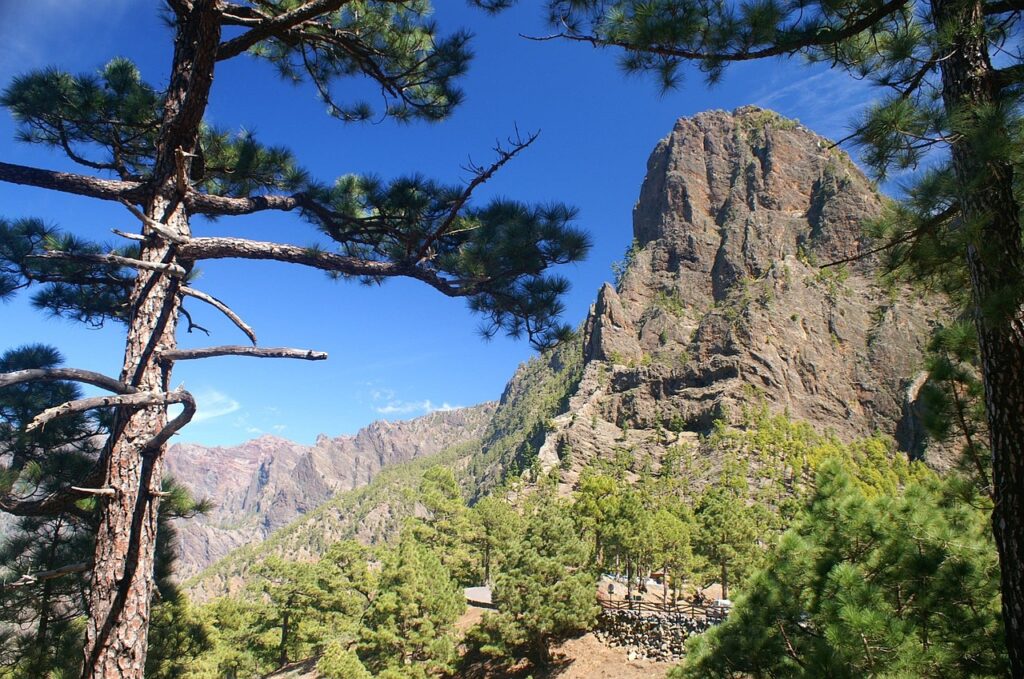
But coworking infrastructure? Almost nonexistent. You’re working from your accommodation, from cafés, or from the odd desk-hire setup that may or may not still be operating. Internet reliability varies much more than on the main islands. Some rural parts of La Palma and La Gomera have genuinely poor connectivity.
That said, there are signs of change. New facilities have been appearing in Santa Cruz de La Palma as the Spanish government pushes the digital nomad visa programme, and some coliving/retreat spaces have opened on La Gomera. If you’re going to base yourself on one of the smaller islands, do specific research before you go — conditions change fast, and the information online is often outdated.
Realistically, the smaller islands make more sense as a week-away escape from your main base rather than a primary work location. Come for the landscape then head back for the community.
Island Comparison: Which is Right for You?
| Island | Best For | Coworking Scene | Community | Cost |
|---|---|---|---|---|
| Gran Canaria | Long-term base, city life + beach | ⭐⭐⭐⭐⭐ Excellent | ⭐⭐⭐⭐⭐ Largest | €€ |
| Tenerife (North) | Authenticity, culture, stability | ⭐⭐⭐⭐ Strong | ⭐⭐⭐⭐ Settled community | €€ |
| Tenerife (South) | Sun reliability, short stays | ⭐⭐⭐ Good | ⭐⭐⭐ Active but transient | €€€ |
| Lanzarote | Unique landscape, quieter pace | ⭐⭐⭐ Growing | ⭐⭐⭐ Tight-knit | €€ |
| Fuerteventura | Surf + work lifestyle | ⭐⭐⭐ Variable quality | ⭐⭐⭐ Niche nomad crowd | €€ |
| Smaller islands | Escapes, retreats | ⭐ Minimal | ⭐ Very small | € |
Practical Things to Consider
Mobile data as backup. Even in Las Palmas, café WiFi can go down. A Spanish SIM with a decent data plan (Movistar, Orange, and DIGI all have good coverage across the islands) is worth having on day one. DIGI in particular is extremely cheap — around €20/month for unlimited data — and coverage has improved significantly.
Afternoon closures. Some smaller coworking spaces and many businesses still close between roughly 2pm and 4–5pm, particularly in smaller towns. Not universal, and cities like Las Palmas and Santa Cruz largely ignore this. But worth knowing if you’re in a smaller town and planning around it.
Day passes vs monthly. If you’re staying more than a week, most spaces make the monthly membership work out significantly cheaper. A €20 day pass five days a week is €400/month; most monthly memberships are half that. Ask about weekly rates if you’re in the middle ground.
Air conditioning in summer. The Canary Islands don’t get the extreme heat of mainland Spain, but July and August can be warm enough indoors to make working unpleasant. Check that spaces have proper AC before committing. Most established spaces do — but it’s worth asking.
Bank accounts. If you’re here on the digital nomad visa, getting a Spanish bank account early makes everything easier — paying rent, utilities, and monthly coworking subscriptions without international fees. Revolut and Wise work for the short term, but a local account (BBVA and CaixaBank are generally more expat-friendly) saves headaches long-term.
Find a Coworking Space
We’re building a directory of coworking and workspace listings across the Canary Islands. You can browse the full listing here — if you run a space or know of one that should be listed, get in touch.
And if you’re figuring out the visa side of things, the Spain Digital Nomad Visa guide has everything you need — income requirements, documents, the two ways to apply, and the Beckham Law tax setup explained in plain English.